
Relocating to the Bay Area can be expensive, but with the right strategies, you can save money and reduce stress. Here’s a quick breakdown of how to cut moving costs:
- Choose the right moving company: Compare quotes, check licenses, and ask about discounts.
- Pick the best moving date: Move during off-season (October–April), mid-week, or mid-month for lower rates.
- Declutter before moving: Sell, donate, or recycle items you don’t need to reduce your moving load.
- Save on packing supplies: Use free boxes, household items for padding, and borrow materials when possible.
- Get help without hiring movers: Organize friends and family to assist, and handle smaller items yourself.
- Cut housing costs: Explore affordable neighborhoods, short-term rentals, or sharing housing with roommates.
Key Tip: Plan ahead, book early, and keep your move flexible to maximize savings. With these steps, you can relocate to one of the most expensive areas in the U.S. without breaking the bank.
Key Factors Affecting Moving Costs🏧 in the Bay Area
1. Find the Right Moving Company
Picking the right moving company can make a big difference in managing Bay Area moving costs.
Get Multiple Moving Quotes
Start by gathering detailed quotes from licensed movers. In the Bay Area, local moving costs typically range between $300 and $1,500. When comparing quotes, focus on:
- Hourly rates: Expect to pay $50-$100 per hour for two movers, $75-$150 for three movers, or $100-$200 for four movers.
- Services included: Basic services usually cover loading, transportation, and unloading.
- License verification: Check the company’s licensing on the California Public Utilities Commission (PUC) website.
Ask About Discounts
Inquire about discounts for off-peak times, mid-week moves, or early bookings. Also, request a "not-to-exceed" contract along with on-site estimates. These strategies can help you save while ensuring clear and predictable pricing.
Why Choose Golden Bay Relocation
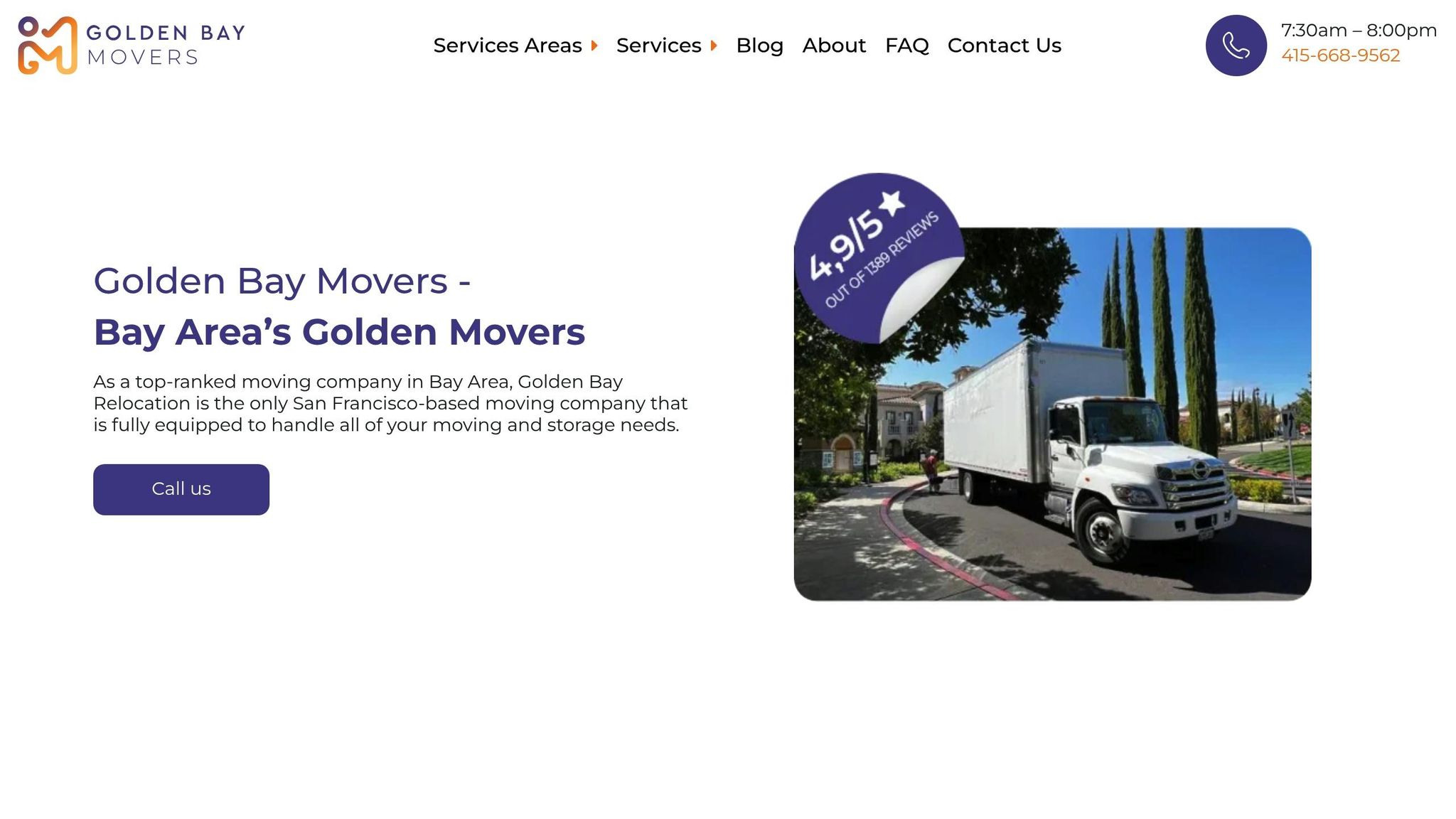
Golden Bay Relocation stands out for its straightforward pricing with all-inclusive rates that cover essential equipment and basic insurance. They also offer flexible service levels to meet different needs:
| Service Level | What’s Included | Ideal For |
|---|---|---|
| Standard | Loading, transport, and unloading | DIY packers |
| Partial Packing | Standard service plus light packing | Those needing minimal help |
| Full Service | Complete packing and moving | Full-service convenience |
Pro tip: Pack your boxes ahead of time to cut down on hourly costs.
2. Pick the Best Moving Date
Choosing the right moving date can help you save money. Here’s how to plan your move to keep costs down and make the process smoother.
Move During Off-Season Months
Moving costs in the Bay Area are higher during peak seasons. To save some cash:
- Plan your move between October and April
- Avoid the busy months of May through September
- Take advantage of the Bay Area’s mild winters, which make off-season moves easier
During the off-season, movers often offer discounts to fill their schedules.
Opt for Mid-Week and Mid-Month Moves
The specific day you move matters. According to One Move Movers, moving on weekdays is usually cheaper.
| Moving Time | Cost Impact | Availability |
|---|---|---|
| Weekdays (Tue-Thu) | Lowest rates | High availability |
| Mid-month (10th-20th) | Regular rates | Good availability |
| Weekends | Premium rates | Limited availability |
| Month-end | Highest rates | Very limited availability |
Book Early to Lock in Better Rates
For the best prices and more options, reserve your move well in advance:
- Local moves: Book 4–6 weeks ahead
- Interstate moves: Book 8 weeks ahead
- International moves: Book 12+ weeks ahead
If you’re moving during a busy period or on a weekend, booking early is even more important to secure lower rates and ensure equipment availability.
3. Reduce Your Moving Load
The amount of stuff you move directly affects your moving costs. By sorting through your belongings and cutting down what you take, you can save a lot of money.
Sell or Donate Unneeded Items
Start decluttering early to make your move easier. Here’s a quick guide on how to decide what to let go of and how to do it:
| Category | What to Think About | How to Get Rid of It |
|---|---|---|
| Furniture | Size, condition, and fit in your new home | Sell online or hold a yard sale |
| Clothing | Items you haven’t worn in a year | Donate to local charities |
| Documents | Old or unnecessary paperwork | Shred or digitize |
| Electronics | Outdated or unused gadgets | Sell or recycle |
| Kitchen Items | Duplicates or items rarely used | Donate or sell |
Moving Forward
Use the "Four-Box Method" to stay organized while decluttering:
- Keep: Things you use all the time
- Donate: Items in good shape that others might need
- Sell: Valuable stuff you don’t need anymore
- Trash: Broken or outdated items
Getting rid of excess items not only lowers costs but also makes the move less stressful.
Fewer Items, Lower Costs
The less you move, the less you’ll spend on packing, storage, and transportation.
To decide what’s worth keeping, ask yourself:
- Have I used this in the past year?
- Am I holding onto it out of guilt or obligation?
- Does it fit my new lifestyle or space?
Declutter one area at a time:
- Garage: Tools and outdoor equipment
- Attic: Seasonal decorations and stored items
- Basement: Old furniture and appliances
- Closets: Clothes and accessories
Make frequent donation trips as you sort, and involve your family to share the workload. This way, everyone has input on what stays and what goes, making the process smoother and more collaborative.
sbb-itb-741331f
4. Save on Packing Supplies
Choosing the right mover and moving date is important, but cutting down on packing supply costs can also make a big difference. Supplies can get expensive fast – a typical kit for a two-bedroom house runs between $178 and $197.
Where to Find Free Boxes
Start gathering boxes well in advance to sidestep last-minute costs. Here are some places to look for free boxes:
| Location | Best Times to Ask | What You’ll Find |
|---|---|---|
| Grocery Stores | Early morning, mid-week | Sturdy produce boxes |
| Liquor Stores | Weekday afternoons | Strong boxes with dividers |
| Bookstores | Delivery days | Medium-sized boxes |
| Pharmacies | Weekend mornings | Small to medium boxes |
For specialty items, wardrobe boxes run about $8–$12 each, while picture boxes cost around $10. You can also check online platforms like Craigslist, Facebook Marketplace, or Nextdoor.com for free or discounted supplies.
Use Household Items as Padding
Skip spending $9 per pack on packing paper or $10–$15 per box for glass-packing kits. Instead, get creative with what you already have. Wrap plates and bowls in sweaters, use dish towels for glassware, fill shoes with socks, and cushion fragile items with pillows or blankets.
Borrow Packing Materials
Before buying anything, reach out to your network. Post on neighborhood apps, ask friends who’ve moved recently, or join local "Buy Nothing" Facebook groups. Community bulletin boards can also be a good resource. Renting plastic moving boxes is another option for delicate items. For specialty kits like kitchen packing supplies, which can cost around $102, see if friends or family have leftovers from their moves.
If you’re moving from a one-bedroom apartment, a complete kit costs between $69 and $90. These strategies help cut costs while keeping your items safe during the move.
5. Get Help Without Hiring Movers
Cutting down on professional mover hours can save you a lot. Here’s how to get assistance without spending too much.
Organize a Moving Team
Planning ahead and keeping communication clear can make a big difference. Start organizing your moving team by reaching out to friends and family about 3-4 weeks before your move.
| Time Frame | Action Items | Important Details |
|---|---|---|
| 3-4 weeks before | Invite helpers | Include the exact date, time, and duration |
| 2 weeks before | Confirm attendance | Get a final headcount and preferences |
| 1 week before | Share plan | Assign specific roles and tasks |
| Day before | Send reminders | Include parking info and what to wear |
"When your friends and family arrive to help you move, it’s your responsibility to give them clear and direct instructions on what to do." – Kaitlyn Pacheco, Editor
Make the day easier and more enjoyable for your helpers:
- Provide food and drinks, like breakfast, lunch, and snacks.
- Schedule breaks every 2-3 hours to avoid burnout.
- Have supplies ready, such as work gloves and water bottles.
- Offer to return the favor when they need help moving.
Once your team is ready, focus on managing smaller, more personal items yourself.
Move Small Items Yourself
Taking care of smaller, valuable items on your own can save time and ensure their safety. Here’s what to prioritize:
- High-value items: Jewelry, important documents, and electronics.
- Fragile pieces: Family heirlooms, artwork, and delicate decorations.
- Essential items: Medications, daily necessities, and key paperwork.
To stay organized and efficient:
- Pack one room at a time and create an inventory list.
- Use your own vehicle to transport items in multiple trips before moving day.
- For apartment moves, reserve elevators and check building regulations.
Leave the heavy lifting to professionals or strong helpers with the right equipment.
6. Cut Housing Costs
After trimming moving expenses, managing housing costs is the next big step to keep your relocation budget in check. Just like with moving, a bit of planning can go a long way in saving money on housing.
Consider More Affordable Areas
San Francisco’s average price for a single-family home is a staggering $2.4 million. However, nearby cities offer more budget-friendly options:
| City | Median Home Price | Average Monthly Rent |
|---|---|---|
| Vallejo | $525,000 | $2,056 |
| San Pablo | $540,000 | $2,323 |
| Concord | $780,000 | $2,288 |
| Richmond | $679,000 | $2,801 |
If staying within San Francisco is a priority, neighborhoods like Ingleside and Excelsior might be worth exploring. Their median home values hover around $1.12–$1.13 million, offering a balance between cost and accessibility. A knowledgeable real estate agent can help you weigh factors like commute times, amenities, and overall affordability.
Explore Short-Term Housing Options
Short-term rentals are another way to keep costs manageable while giving you time to explore different neighborhoods. The Bay Area has about 10,080 short-term rental options, catering to various budgets:
- Studio apartments start at $1,420 per month
- One-bedroom units start from $875 per month
- Many furnished rentals include utilities and WiFi
These rentals provide flexibility, letting you test out different areas without committing to a long-term lease.
Share Housing Costs with Roommates
Splitting rent with roommates is a tried-and-true way to save. For example, sharing a two-bedroom apartment can cut individual costs significantly – turning a $2,500 monthly rent into about $1,750 per person. Additional perks include:
- Shared utility bills
- Lower internet and streaming service costs
- Shared spending on furniture and household essentials
In Daly City, two-bedroom apartments average $3,289 per month. Nearby areas like San Bruno and Burlingame offer similar options, with rents ranging from $3,309 to $3,494. By splitting costs, you can make these higher rents more manageable.
Conclusion: Smart Ways to Save on Your Move
Relocating to the Bay Area doesn’t have to drain your wallet. With thoughtful planning and smart choices, you can cut costs and make your transition to a new home much easier.
Before you move, it’s important to set aside enough money to cover expenses. Experts suggest saving at least three months of living costs, though six months is even better for peace of mind. Considering the average rent in the San Francisco Bay Area is $3,629 per month, having a financial cushion is key to avoiding stress.
Here’s one simple way to save money during your move:
- Sell what you don’t need: Use your pre-move decluttering as a chance to sell items you no longer want. This can put extra cash in your pocket to help with moving expenses.
Hiring professional movers, like Golden Bay Relocation, can also help make the process easier and prevent costly mistakes. Their experience ensures your belongings are handled carefully, saving you time and potential headaches.
Keep in mind that 75% of movers last year faced unexpected expenses they didn’t plan for. By using these cost-saving tips and working with trusted professionals, you can avoid surprises and make your move a financial success.
Start planning early, stay organized, and lean on expert advice to keep your move efficient and budget-friendly. Following these steps can turn your relocation into a smooth and affordable experience.
Related posts
- 5 Best Storage Solutions for Bay Area Apartment Moves
- Top 8 Questions to Ask Before Hiring Moving Services
- 10 Fire Safety Tips for Storage Facilities
- Top 7 Tools for Packing Fragile Items